Imagine you’re sailing on the vast ocean of entrepreneurship. The wind is in your favor, and your small business ship is gliding smoothly. But, what if a sudden storm hits? That’s precisely where small business insurance sails in as your life vest. It’s not just a safety net; it’s a strategic tool empowering you to weather the storms of business challenges.
Many business owners underestimate the power of insurance until it’s too late. It’s not just about coverage; it’s about peace of mind and the ability to focus on growth rather than catastrophes. In this guide, we’re diving deep into the world of small business insurance, exploring its types, costs, and how to choose the right coverage for your business.
Importance of Small Business Insurance
Imagine investing everything you have into your small business, only to lose it all overnight. Scary, right? That’s the reality for many business owners who overlook insurance.
Insurance for small businesses is not just a safety net—it’s a lifeline. From property damage to lawsuits, unforeseen events can wipe out years of hard work in an instant. Yet, 44% of small business owners have never had insurance. Crazy, huh?
Real-World Examples of Insurance Necessity
Think you’re safe without insurance? Here’s the deal: unexpected disasters happen. Remember the small bakery that burned down last year? Without insurance, they’d be toast (pun intended). Natural disasters, theft, or even a customer slipping on your premises can turn into financial nightmares.
Here’s another stat: 60% of small businesses close within six months of a cyberattack. So, consider cyber liability insurance if you store client data. It’s not just for tech companies anymore.
Pro Tip: “If you can’t afford insurance, you can’t afford to be in business.” That phrase should be every entrepreneur’s mantra.
Types of Small Business Insurance
Did you know that 40% of small businesses have never been insured? Crazy, right? The risks of being uninsured are staggering, but the solution is simpler than you think.
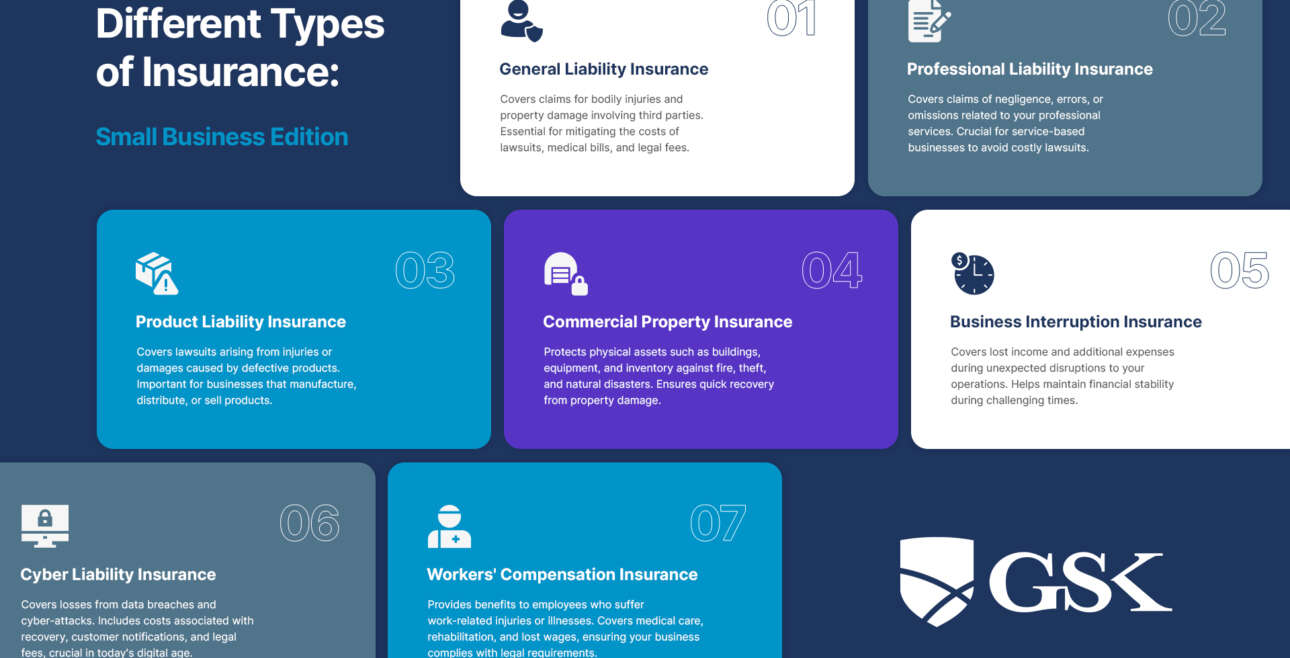
Let’s dive into the world of small business insurance. There are several types of policies designed to protect your enterprise from unexpected financial hits. The key is knowing which coverage is right for you.
General Liability Insurance
This is your first line of defense. General Liability Insurance protects your business from claims like bodily injury, property damage, and personal injury. Whether you run a café or a consulting firm, this type of insurance is a must-have. It’s the kind of insurance that saves you when someone trips over a loose cable in your office.
Pro Tip: Always read the fine print to understand exactly what your policy covers.
Professional Liability Insurance
If you provide services, you need this. Also known as Errors and Omissions Insurance, it covers negligence claims due to mistakes or failure to perform. Imagine a client saying your advice caused them to lose money. Without this insurance, you could be in serious trouble.
Property Insurance
Think of all the computers, inventory, and furniture your business owns. Property Insurance helps cover these assets in case of theft, fire, or natural disasters. But here’s the deal: not all disasters are covered, so know your policy well.
Workers’ Compensation Insurance
Have employees? You can’t skip this. Workers’ Compensation Insurance covers medical and disability expenses if an employee gets injured on the job. This isn’t just smart—it’s often legally required.
Commercial Auto Insurance
Do you or your employees drive for work? Personal auto policies won’t cut it. Commercial Auto Insurance covers business-owned vehicles and can protect against liabilities from accidents that occur during business operations.
| Insurance Type | Coverage | Benefits | Suitable Business Types |
|---|---|---|---|
| General Liability | Bodily injury, property damage | Protects against common lawsuits | All small businesses |
| Professional Liability | Errors, negligence | Protects against client lawsuits | Consultants, service providers |
| Property Insurance | Theft, fire, some disasters | Safeguards physical assets | Retail, offices |
| Workers’ Compensation | Employee injuries | Covers medical expenses | Any business with employees |
| Commercial Auto | Vehicle-related liabilities | Covers work-related driving | Businesses with company vehicles |
Cost Factors and Budgeting

Ever wondered why some business insurance premiums are sky-high while others are a steal? You’re not alone. Understanding the cost factors of small business insurance is crucial.
It’s not just about the size of your business. Factors like your industry, location, and the coverage amount play a big role. But here’s the deal: You can control some of these costs with smart budgeting and strategic planning.
Factors Influencing Insurance Costs
Small business insurance costs depend on multiple elements. The risk level of your industry and how many employees you have can hike your premiums. For instance, a tech startup will pay less than a construction company.
Here is the deal: Your business location also affects costs. Operating in a disaster-prone area? Expect higher rates. Plus, the type of coverage you need—whether it’s liability, property, or worker’s comp—directly impacts your budget.
Effective Budgeting for Insurance
To budget effectively, you must first assess your specific needs. Don’t just opt for the cheapest policy. It may leave you vulnerable. Instead, align your insurance coverage with potential risks.
Step #1: Calculate your monthly and annual revenues. Then, allocate a percentage of these revenues specifically for insurance.
Step #2: Regularly review your policies. Insurance needs can change as your business evolves. Adjust your budget accordingly to prevent overspending.
Cost-Saving Tips for Small Business Insurance
Want to save on insurance? Start by shopping around. Different insurers offer different rates, and a little comparison can lead to significant savings.
- Bundle policies to receive discounts.
- Implement risk management strategies to lower premium costs.
- Leverage a higher deductible to reduce monthly premiums.
- Maintain a good credit score—it can influence your insurance rates.
Pro Tip: Investing in a safety training program for employees can reduce risks and insurance costs.
Remember: The key is not just minimizing costs but ensuring adequate coverage. A well-planned insurance budget protects your business and saves money in the long run.
Selecting the Right Insurance Provider
Choosing the right insurance provider is a crucial decision that can make or break your small business. Did you know that 45% of small businesses suffer avoidable losses because of inadequate insurance?
Here’s the deal: It’s not just about finding the cheapest option. You need a provider that offers the right coverage, impeccable service, and efficient claims processing.
Strategies for Evaluating Insurance Providers
Step #1: Research the reputation of each provider. Check online reviews and ask for references. A provider with consistent positive feedback is more likely to deliver reliable service.
Step #2: Compare the offerings. Look beyond the policy price and consider what each provider includes in their packages. Some might offer perks like legal consultation or cyber risk protection.
Step #3: Assess financial stability. Check their financial ratings from agencies like A.M. Best or Moody’s. This ensures they can cover claims, no matter the economic climate.
Pro Tip: Choose a provider that specializes in your industry to get tailored advice and coverage.
Provider Offerings Comparison
Let’s make your choice easier by comparing different providers.
| Provider | Key Features | Customer Ratings | Cost |
|---|---|---|---|
| Provider A | 24/7 Customer Support, Cyber Risk Protection | 4.5/5 | $$$ |
| Provider B | Legal Consultation, Flexible Payment Plans | 4.3/5 | $$ |
| Provider C | Industry-Specific Coverage, Fast Claims Processing | 4.7/5 | $$$$ |
Importance of Customer Service and Claim Processing Efficiency
Imagine filing a claim and waiting weeks for a response. Sounds frustrating, right? That’s why customer service is non-negotiable. You want a provider who answers quickly and resolves issues efficiently.
Efficient claim processing is also key. Delays can cost you time and money. Always ask potential providers about their average claim processing time and procedures.
Pro Tip: Call their customer service before signing a policy to test their response time and helpfulness.
Legal Requirements and Compliance

Did you know that 40% of small businesses are not insured at all? Many entrepreneurs skip over insurance, thinking it’s optional or too costly. Here’s the deal: it’s not just a protective measure—it’s a legal requirement in many cases.
Most industries have specific insurance requirements dictated by state laws and regulations. These rules ensure that businesses operate responsibly and protect their employees and customers. Failing to comply can lead to hefty fines or even force you to shut down.
Understanding Industry-Specific Insurance Requirements
Each industry has its own set of rules. For instance, if you’re in construction, you’ll likely need workers’ compensation and general liability insurance. On the other hand, if you run a food service business, health regulations might require you to have product liability insurance.
Here’s how you can make sure you’re covered:
- Research state-specific regulations for your industry.
- Consult with a professional insurance advisor.
- Ensure your policies are up-to-date with any legal changes.
Ensuring Compliance with Regulatory Standards
So, how do you make sure you’re compliant? Start by auditing your current insurance coverage. Ensure it aligns with your state’s legal requirements and covers every aspect of your operations. But don’t stop there. Regular updates are crucial.
Compliance isn’t just about having insurance—it’s about having the right insurance. This means knowing the limits, exclusions, and conditions of your policies.
Pro Tip: “Regularly review your insurance policies with legal and industry experts to stay compliant.”
Checklist of Legal Considerations for Small Business Owners
To make things easier, here’s a quick checklist of what you need to consider:
- Verify industry-specific insurance requirements.
- Confirm the minimum coverage amounts.
- Stay informed about changes in insurance laws.
- Ensure policy renewals before expiration.
- Evaluate your coverage limits regularly to match business growth.
Case Studies and Success Stories
Ever wonder how the right insurance could save your business? You’re not alone. Many small business owners underestimate the power of effective insurance coverage until it’s too late.
Let me show you some real-life examples of how small businesses not only survived but thrived thanks to smart insurance strategies. These aren’t just stories; they’re blueprints for success you can follow too.
Restaurant’s Journey to Resilience
Meet Lisa, owner of a bustling downtown bistro. A kitchen fire almost ended her dream overnight. BUT, here’s the deal: she had comprehensive business interruption insurance. This policy covered her lost income during the repairs, keeping her afloat when it mattered most. Today, her bistro not only reopened, but expanded due to the solid financial foundation her insurance provided.
“Insurance was my safety net when everything went up in smoke. I owe my business’s survival to it.” – Lisa, Bistro Owner
Tech Startup’s Unexpected Boost
Then there’s John, a tech entrepreneur with a game-changing app. After a data breach, John faced potential ruin. Step #1 was his cyber liability insurance. It handled legal fees and customer notifications, saving him a fortune. Now, his app is more profitable than ever, thanks to the trust his insurance strategy built with users.
“Cyber insurance didn’t just protect us; it positioned us as a secure leader in our field.” – John, Tech Startup CEO
Retail Store’s Rapid Recovery
Finally, consider Sarah, who runs a local retail store. When a sudden flood damaged her inventory, she was devastated. BUT, she had a comprehensive property insurance policy. This quick payout allowed her to replace stock and resume business without skipping a beat. Her insurance plan turned a potential disaster into a non-event.
“Thanks to my insurance plan, what could have been a major setback became just another day at the office.” – Sarah, Retail Store Owner
Pro Tip: Always tailor your insurance plan to match your business’s unique risks. A one-size-fits-all policy won’t cut it when the unexpected strikes.
Closure
In the ever-evolving landscape of small business ventures, having the right insurance is akin to having a reliable compass. It guides you through risks and uncertainties, ensuring your journey is both prosperous and secure. Now that you’re equipped with the knowledge of small business insurance, it’s time to take action and safeguard your entrepreneurial dreams.
FAQ Section
What are the essential types of small business insurance?
The essential types include General Liability Insurance, Professional Liability Insurance, and Property Insurance, each covering different aspects of your business.
Why is small business insurance important?
It’s vital as it protects your business from financial losses due to accidents, lawsuits, property damage, and other unforeseen events.
How do I choose the right insurance provider for my small business?
Evaluate providers based on their key features, cost, customer ratings, and claim processing efficiency to find the best fit for your needs.
What factors influence the cost of small business insurance?
Factors include the type and size of your business, location, claims history, and the specific coverage required.
Are there legal requirements for small business insurance?
Yes, various industries have specific legal requirements for insurance, and it’s crucial to comply with these to avoid penalties.
