Let’s face it: navigating the world of small business insurance can be as daunting as trying to solve a Rubik’s cube blindfolded. You know it’s something you need, but with so many options, where do you even start? Don’t worry, I’ve got your back! In this guide, we’re going to unravel the mysteries of three critical types of insurance you simply cannot ignore if you want to safeguard your business like a pro.
Insurance isn’t just about ticking a box; it’s your safety net, the unsung hero that swoops in when you least expect it. From protecting your assets to ensuring that one slip-up doesn’t sink your ship, these insurance policies are the silent guardians of your entrepreneurial dreams. Stick with me, and by the end of this, you’ll not only understand the why but also the how of getting the right coverage for your business.
Overview of Small Business Insurance

Did you know that 40% of small businesses face a risk of being sued? High-stakes, right? This is why insurance isn’t just a nice-to-have—it’s a must-have for safeguarding your business.
Insurance acts as a safety net, helping keep your business afloat when unexpected events occur. Without it, a single lawsuit or disaster could wipe you out. So, what’s out there, and what do you need?
Essential Insurance Policies for Small Businesses
The key to managing risk is knowing which insurance policies are essential for your business. But where do you start? Here are the most common types:
- General Liability Insurance
- Professional Liability Insurance
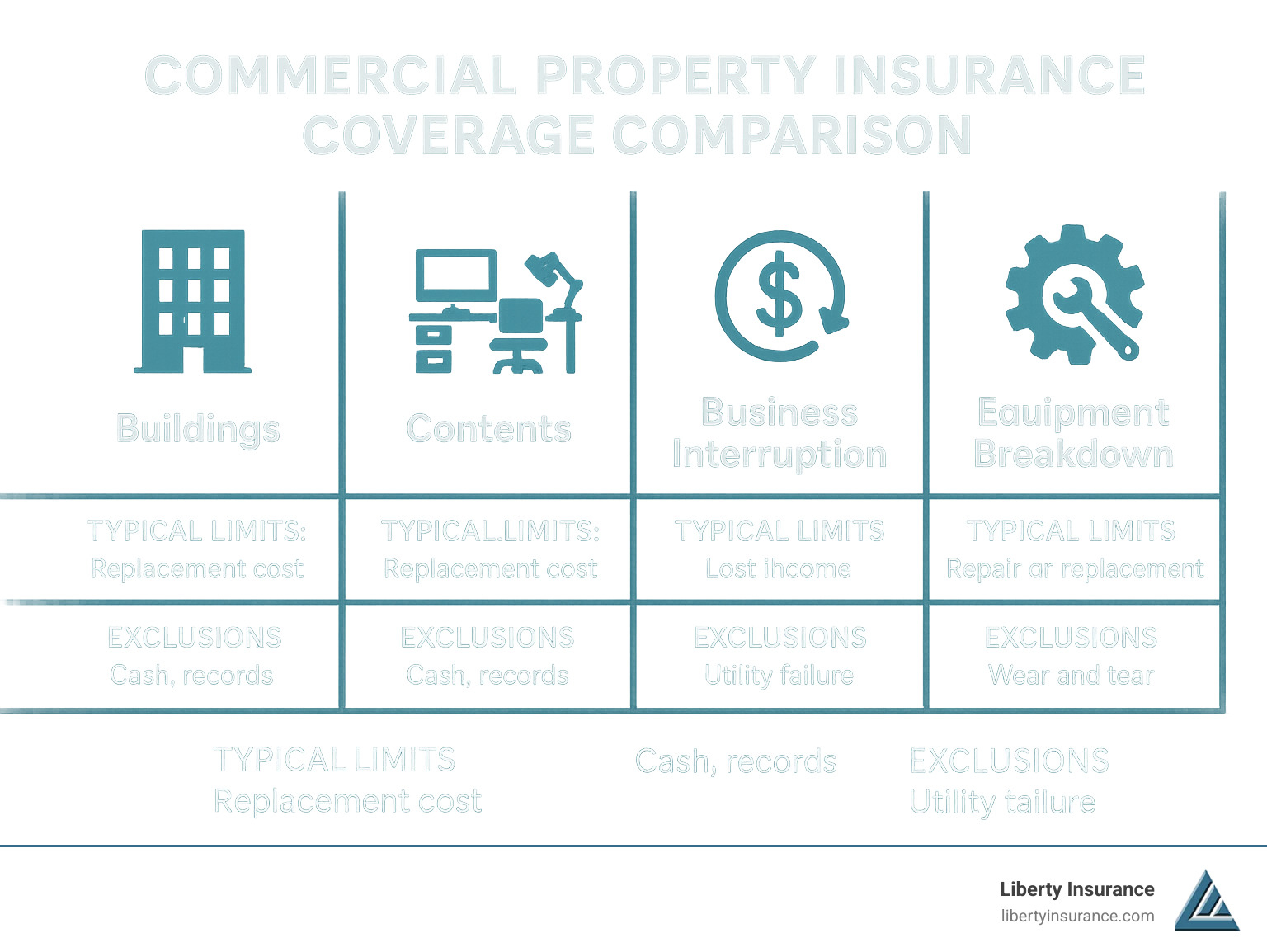
- Property Insurance
- Workers’ Compensation Insurance
- Business Interruption Insurance
These policies cover everything from slip-and-fall accidents to natural disasters. Imagine losing a week’s income due to a power outage. Business Interruption Insurance has your back.
Pro Tip: Always review your policy limits and deductibles to ensure they align with your risk tolerance.
How Insurance Protects Your Financial Health
Insurance is like a financial shield. It protects against massive out-of-pocket costs, allowing you to focus on growing your business, not saving it. For example, if a fire damages your premises, Property Insurance helps cover repair costs.
But it’s not just about the immediate financial hit. Lack of insurance can lead to long-term reputation damage and loss of customer trust. Trust me, you don’t want to be the business that couldn’t deliver because of inadequate risk management.
Commercial General Liability Insurance
Did you know that 4 out of 10 small business owners will experience a property or liability loss in the next 10 years? Scary, right? That’s where Commercial General Liability (CGL) Insurance steps in.
Simply put, CGL insurance is your financial safety net against claims of bodily injury and property damage. This coverage is crucial for small businesses because it protects your assets and keeps your operations running smoothly.
Understanding Coverage and Comparisons
CGL insurance covers those unpredictable moments when someone gets injured on your premises or when your business activities cause property damage. Think of it as damage control for your business’s reputation and finances.
| Insurance Type | Coverage Focus | Best For |
|---|---|---|
| Commercial General Liability | Bodily injury, property damage | All small businesses |
| Professional Liability | Errors and omissions in services | Consultants, accountants |
| Product Liability | Defects in products | Manufacturers, retailers |
Here’s the deal: Not all liabilities are covered. You need to know the exclusions under CGL policies to avoid surprises.
Typical Exclusions in General Liability Policies
General liability policies usually exclude damages from professional errors, employee injuries, and intentional acts. You won’t find coverage for damages resulting from professional advice you give or if an employee gets hurt on the job.
Pro Tip: Always read the fine print. Understand the exclusions to tailor additional coverage that fills these gaps.
When Your Business Needs It
Picture this: A customer slips on your freshly mopped floor and breaks their arm. Or, your contractor accidentally damages a client’s property while on a job. These instances can lead to hefty lawsuits.
That’s why CGL insurance is a must-have for any small business. It provides the peace of mind you need to focus on what you do best—running your business.
Business Owner’s Policy (BOP)
Did you know that a BOP can save your business from unexpected financial disasters? It’s true! A Business Owner’s Policy is like a safety net for small businesses.
A Business Owner’s Policy bundles multiple types of coverage into one convenient package. Typically, it includes property insurance, general liability insurance, and business interruption insurance. This combination covers most risks facing a business owner.
Businesses That Benefit from a BOP
Are you wondering if your business could benefit from a BOP? Here is the deal: if you own a small to mid-sized business, there’s a good chance you need one. Let’s look at the types of businesses that typically purchase a BOP:
- Retail Stores
- Restaurants
- Offices
- Contractors
- Wholesalers
- Service Businesses
Advantages of Bundling Insurance Policies
How does bundling your insurance policies help? Well, for starters, you get more comprehensive coverage at a lower cost. You could save up to 20% by purchasing a BOP compared to individual policies.
But that’s not all. Bundling makes managing your policies easier. You have one renewal date, one premium, and one point of contact. It’s a win-win!
Pro Tip: Always compare the cost of a BOP to separate policies to ensure you’re getting the best deal.
Scenario: How a BOP Provides Coverage During a Loss
Imagine your thriving retail store experiences a fire. The damage is extensive, and you have to close temporarily.
Here’s how a BOP saves the day: The property insurance component covers the cost of repairs. Meanwhile, business interruption insurance helps cover lost income during the downtime. Finally, if a customer files a lawsuit due to the incident, general liability insurance has you covered. With a BOP, you’re not just surviving; you’re set up to keep thriving.
Workers’ Compensation Insurance

Did you know that one workplace accident happens every seven seconds? That’s where Workers’ Compensation Insurance comes in. It’s not just a safety net; it’s a lifeline.
Workers’ Compensation Insurance is designed to protect both employees and employers. When an employee gets injured or sick because of their job, this insurance covers medical expenses and lost wages. Without it, you could face crippling out-of-pocket costs or even lawsuits.
The Legal Requirements for Small Businesses
Almost every state requires businesses to have Workers’ Compensation Insurance. Whether you have one employee or one hundred, you’re not exempt. Failing to comply can lead to severe penalties and fines. Here is the deal: ignorance is not bliss here. Make sure you’re compliant from day one.
The Financial Implications of Skipping Coverage
You might think you can save money by skipping this insurance. BUT the financial risk is enormous. Imagine paying for surgery or rehabilitation out of pocket. That’s the reality if you roll the dice and go without.
“The cost of skipping Workers’ Compensation Insurance could be the end of your business.”
Case Study: Benefits for a Small Enterprise
Meet Joe, owner of a local bakery. One day, an employee slipped and fractured an arm. Thanks to Workers’ Compensation Insurance, medical bills were covered, and Joe avoided a costly legal battle. The peace of mind alone was worth the investment.
Pro Tip: Review your state’s specific requirements annually. Laws change, and you don’t want to be caught off guard.
Professional Liability Insurance
Did you know that a single mistake can cost your service-based business thousands? Professional liability insurance is your protective shield.
Unlike other forms of insurance, professional liability is crucial for those in the service industry. It covers claims related to mistakes, negligence, and even undelivered services. If you’re a consultant, architect, or any professional offering advice or services, this insurance is your lifeline. Let’s dive into the specifics.
What Professional Liability Insurance Covers
This insurance is a must-have for service providers. It protects you from lawsuits alleging errors, omissions, and negligence that can arise from your professional services. Imagine a client suing you because they claim you gave faulty advice. Without this coverage, legal fees and settlements could be disastrous.
Comparing Professional Liability Insurance to Commercial General Liability Insurance
| Aspect | Professional Liability Insurance | Commercial General Liability Insurance |
|---|---|---|
| Coverage Focus | Errors and negligence in services | Physical damage and injury |
| Ideal For | Service-based businesses | Brick-and-mortar businesses |
| Common Claims | Faulty advice, negligence | Slip and fall accidents, property damage |
Impact on Business Reputation and Trustworthiness
Having professional liability insurance underscores your commitment to accountability and client protection. Clients are more likely to trust a business that visibly protects itself and their interests. This insurance can be a trust signal, enhancing your reputation.
Being insured tells your clients, “I’m serious about my business and prepared for anything.”
Selecting the Right Insurance Provider
Ever felt like picking an insurance provider is like finding a needle in a haystack? You’re not alone. The choice you make can make or break your business safety net.
Here’s the deal: You want an insurance provider that doesn’t just talk the talk, but walks the walk. An ideal provider understands your unique business risks and offers custom-tailored policies to cover them. Too many small businesses make the mistake of going with the first provider they stumble upon. Don’t be one of them!
Criteria for Choosing an Insurance Provider
Before you sign on the dotted line, you need some solid criteria to separate the best from the rest. Think of it as your secret weapon in the insurance arena.
- Do they offer policies specific to your industry?
- How responsive is their customer support?
- What’s their reputation with claims handling?
- Are they financially stable and well-rated?
- Can you customize your coverage?
These questions aren’t just for fun—they’re your first line of defense against providers who might not have your best interests at heart.
Reviewing and Renewing Insurance Policies
Here’s where most small businesses drop the ball: they don’t review their insurance policies regularly. A whopping 40% of businesses aren’t adequately covered! It’s crucial to keep your policies up to date with your business’s changing needs.
Step #1: Set a calendar reminder to review your insurance policies annually. Analyze your business changes, like new services or staff increases, and how they might affect your coverage.
Step #2: Use that renewal period to shop around for better terms. Yes, loyalty is great, but saving money is even better.
Negotiating Terms and Premiums
Think you can’t negotiate insurance terms? Think again! Insurance isn’t a one-size-fits-all deal.
Start by requesting quotes from multiple providers. Use these as leverage. Don’t be shy about asking for discounts or better terms—it’s your right as a customer.
Pro Tip: Call up your current provider with competitor quotes in hand. You’d be surprised how many are willing to match or beat the offer!
Remember, it’s not just about getting lower premiums. Make sure the coverage quality isn’t compromised. A cheap policy that doesn’t pay when disaster strikes is worthless.
Final Summary
In the wild world of entrepreneurship, the right insurance is your best ally. It’s your trusty sidekick in the battle against unpredictability and chaos. By making informed choices about your insurance policies, you’re not just protecting your business—you’re safeguarding your future. So, take action today, because peace of mind is priceless. Until next time, keep hustling and stay insured!
Frequently Asked Questions
What is commercial general liability insurance?
This insurance covers third-party bodily injury, property damage, and advertising injury claims against your business.
How does a Business Owner’s Policy benefit small businesses?
A BOP bundles essential coverages like property and liability insurance, often at a more affordable rate than purchasing separately.
Do all small businesses need workers’ compensation insurance?
Most states require it if you have employees, but the specifics can vary so it’s essential to check local regulations.
Why is professional liability insurance important for service-based businesses?
It protects against claims of negligence or mistakes in the services provided, which could otherwise lead to costly legal battles.
What should I consider when selecting an insurance provider?
Look for financial stability, strong customer service, and a provider that specializes in your industry needs.
